Posts

Writing to a Theme by Allison Symes

Image
Image Credit:  Images created in Book Brush using Pixabay photos. Do you always write to a theme or do you see where your characters take you (and see what the theme is from that)? I’ve done both but these days I prefer knowing what my theme is in advance (even when I set it).  What characters could serve/demonstrate this theme well? I don’t plan out everything. I want to give my imagination what I call manoeuvre room but I need something to get me started. This is where having a set theme is handy. For my short stories and flash fiction, I often write to a theme set by someone else for competitions, themes set by a magazine editor, and so on. I like the challenge here. Having a theme to write to also gives me a framework and I find that structure helpful. I try to keep a stock of stories (standard length short and flash) so when I have an open theme competition, I know I’ve got something I can look at, polish, and submit. The trouble with openness is there are times it can be...
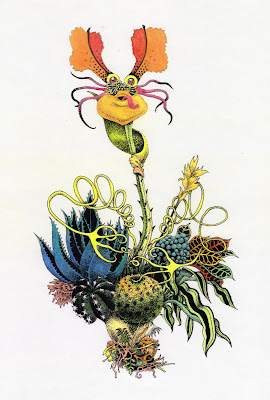
Sentient plants (Part Two) by Elizabeth Kay (Part One November 2021}

Image
It all started with the triffids. Whether it’s science fiction, dystopia or fantasy, plants have a lot to offer from horror to humour. I found John Wyndham’s creation absolutely terrifying. Mankind is rendered blind by a meteor shower, and the genetically-engineered triffids become the dominant species. They are equipped with a powerful sting that can kill, and they can uproot themselves and walk. It also becomes clear that they can communicate with one another. The book was written in 1951, long before we knew anything about the relationship between fungus and trees, and the underground web that passes information back and forth just as efficiently as the internet. The more we know, the more we realise we don’t know, and the more we ought to realise that interfering with nature can have unexpected and usually unpleasant results. The saying In the land of the blind, the one-eyed man is king has been around for a long time, and certainly in Wyndham’s novel the people who were already b...

How Many Friends on FB Does Anybody Need? -- Reb MacRath

Image
It seems we've all become obsessed with having thousands of Friends. And it's not hard to grow obsessed when the system feeds the mania. You've barely opened your account when the deluge begins: Friendship requests from strangers who don't know the first thing about you--or care. They hope to sell you their own books or plots of land in Katmandu or phone sex if you're generous and swear you can land them a date with Bill Kirton, Peter Leyland or, dare they hope, John Logan. Even so, though the smarter part of you knows most of your 5000 Friends are utterly in it to win it--surely at least a few hundred will buy what you're selling...remember your birthday...or enjoy a ridiculous pun. But recently I concluded that, for me at any rate, FB's heartless algorithm was whipping my poor tired butt. Though I'd pruned my list from 3000 to 1000, almost none of my posts made their way into the Feed. Fewer than two dozen names responded to my posts. And, of that numb...

What It's Like to Be a Super-Fan -- Amy Arora

Image
This month, alongside doing a developmental edit for an extremely cool bit of speculative fiction, and outlining a novel of my own, I am working as an examiner for the International Baccalaureate. I have been given 60 Extended Essays to work my way through and to mark as I see fit. It’s surprisingly enjoyable.  The Extended Essay is one of my favourite elements of the IB programme. Students can choose any subject and any topic, then they need to write 4000 analytical words putting forward a line of argument. It’s like a mini dissertation, only the students in question are 17, and they are also studying six other subjects (the IB is hardcore).  Essential accompaniments to essay marking For the students who choose English, the possibilities are endless. So far, I’ve marked essays on classic works of literature ranging from Oscar Wilde to Homer, from Shakespeare to Virginia Woolf. I’ve read about magazine advertising through the years and a whole range of political speeches as we...

Some Reflections on Time: Misha Herwin

Image
  When I have a commission or a project, I like to finish it way before the deadline. Last minute spurts of writing are not for me, so it’s somewhat ironic that this month’s blog is being written so late in the day. It’s not what I planned, but family visits, a birthday treat, a phone call from a friend who needed a little TLC have left me with less time than I thought. Time, however, is something I have been thinking about over the past few days. My musing began when I realised that having arrived in April, a quarter of the year has gone and most of it has passed in a blur. This is not because I have been idle. Far from it. “Yet More Adventures of Poppy and Amelia” book 3 of the series I am writing with my granddaughter is now out.   I have an adult novel almost ready to go and am editing the sixth and last of the Adventures of Letty Parker.   Having said that, I’ve not spent every day writing. There has been lots of domestic, medical and family stuff going on too,...

An Opportunity, & Why Being a Deep Reader & Reading Great Books Matters to Your Writing

Image
  Okay, so, first off, the link if you're interested in learning more:  https://www.bookcritics.org/emerging-critics/fellowship/ Secondly, to my second point, why is it important to be a good reader and read good books? Of course, you already guessed the answer, because it makes you a better author. When I do work as an editor, I see less expert writing very often, and, after decades as a college writing professor, I had already had a lot of experience with that. When writing is not at its peak, there can be a lot of reasons for it. And, unbeknownst to you, I had just written a long-winded explanation about that. And then, following my own advice, I read it over, and decided less is more; screw the lecture. So, to be a better writer on your own, read better books, and then study them, and then ask yourself, "What makes this writing so good?" That's the meat of what I want to convey here. Now to stop blathering away, and give you one small example of what I mean. One o...

Hush! Most Secret! De-censoring a wartime memoir by Julia Jones

Image
On the night of 12/13 April 1943 Lieutenant-Commander Robert Peverell Hichens, Senior Officer at HMS Beehive , the Coastal Forces base in Felixstowe, Suffolk, was at sea. He was leading a unit of four motor gunboats (MGBs) protecting motor launches (MLs) of the 51st Flotilla - also based at Felixstowe -  who were mine-laying off the Dutch coast.  When their job was done, the MLs returned to Felixstowe while the MGBs went on the hunt. They stalked and attacked an enemy trawler (an armed offensive war vessel, not some innocent fisherman) and a gun coaster. The waters off the Netherlands and France were, at that time, an essential supply route for the occupying German forces, therefore a regular conflict zone for the British Coastal Forces. Peter Scott gave these fierce, small scale fights a collective title, The Battle of the Narrow Seas. On this night ‘Hitch’ and his small group had silently manoeuvred up wind of the enemy vessels, then sped at them out of the darkness, engines...